


The Science of Habit Formation: How Behaviors Become Automatic
Every morning, millions of people make coffee, check their phones, or lace up running shoes — without thinking much about any of it. These behaviors feel effortless, almost invisible. But behind that effortlessness lies a sophisticated neurological process that behavioral psychology has spent decades trying to understand. Habit formation is not magic. It is biology, repetition, and reinforcement working in concert.
What Does It Mean for a Behavior to Become "Automatic"?
Automaticity refers to the capacity of a behavior to operate with minimal conscious attention, low cognitive effort, and high efficiency. In psychological terms, a behavior becomes automatic when it no longer requires deliberate decision-making to initiate or sustain.
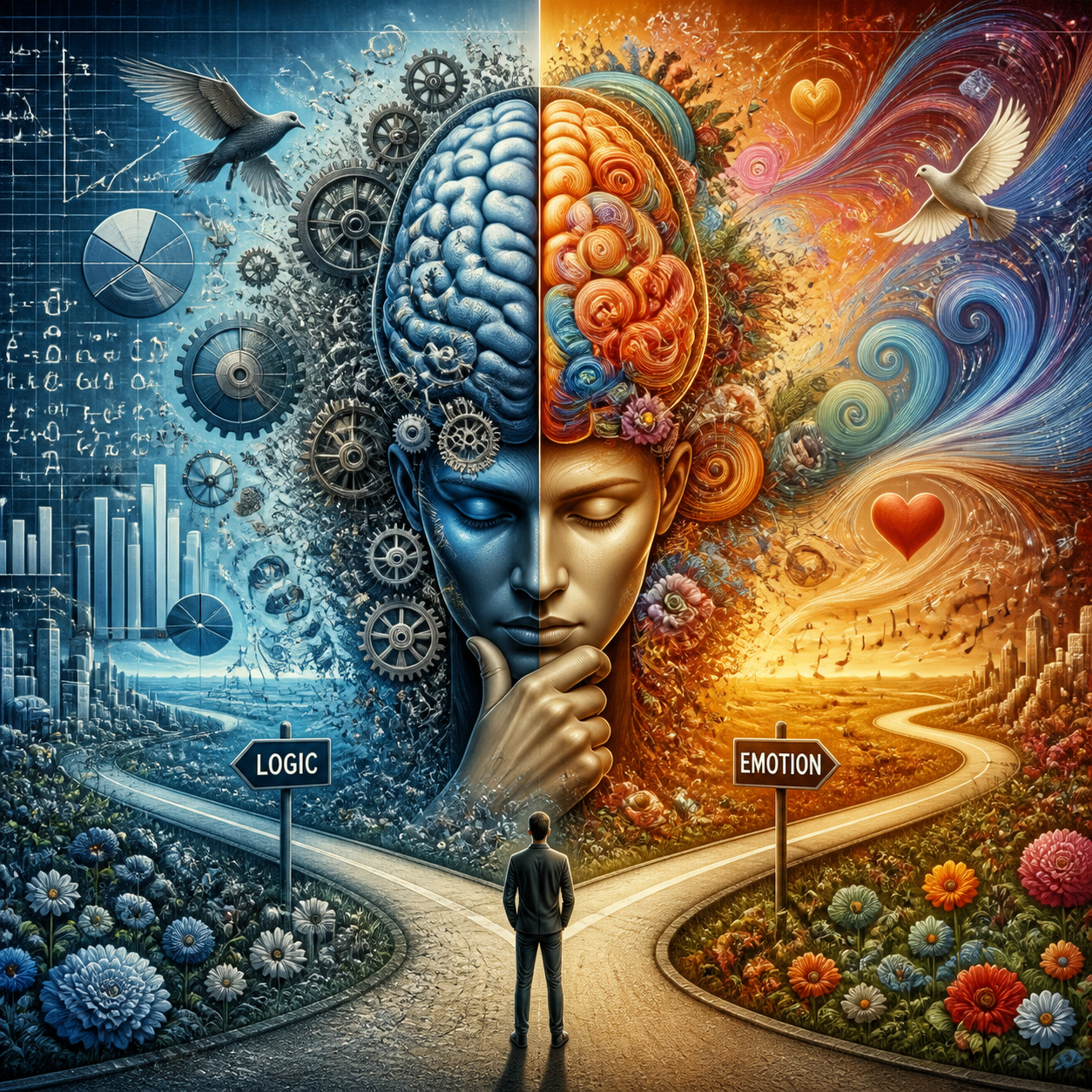
Early research in behavioral psychology distinguished between controlled processing — effortful, slow, and conscious — and automatic processing, which is fast, efficient, and largely outside awareness. When a behavior crosses from one category to the other, something fundamental has shifted in how the brain handles it.
This shift matters because the brain is, at its core, an energy-conservation machine. Automating frequently repeated actions reduces cognitive load — the mental resources required to perform a task. That freed-up capacity gets redirected to more demanding problems. In this sense, habit formation is not laziness. It is intelligent resource allocation.
The Neurological Basis — What Happens in the Brain
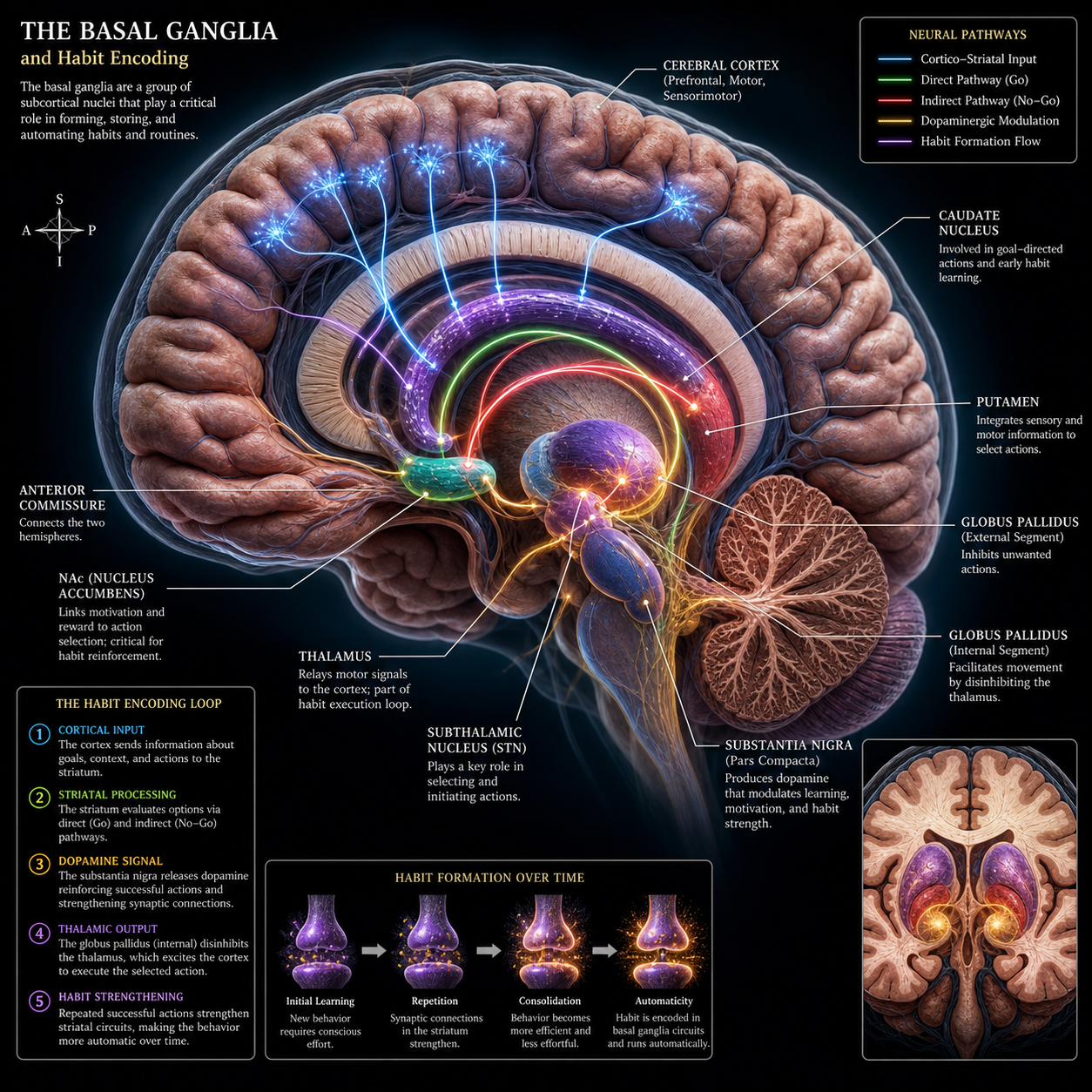
The brain region most closely associated with habit storage is the basal ganglia, a cluster of nuclei deep within the cerebrum involved in procedural learning, motor control, and the sequencing of behavior. When a behavior is new, the prefrontal cortex — the seat of deliberate thought — does most of the work. As the behavior is repeated, control gradually transfers to the basal ganglia.
This transfer is made possible by neuroplasticity, the brain's ability to reorganize its own structure in response to experience. Repeated activation of the same neural circuits strengthens synaptic connections through a process sometimes described as "neurons that fire together, wire together." The pathway becomes more efficient with each repetition, like a trail worn into grass by thousands of footsteps.
A key mechanism in this process is chunking — the brain's way of compressing a sequence of individual actions into a single stored unit. When you first learned to drive, every action (mirror check, gear shift, steering adjustment) required conscious attention. Over time, the brain bundled these into one retrievable chunk labeled something like "driving." This is also how procedural memory works: skills and sequences encoded through practice that can be retrieved and executed without conscious reconstruction.
The Habit Loop: Cue, Routine, Reward
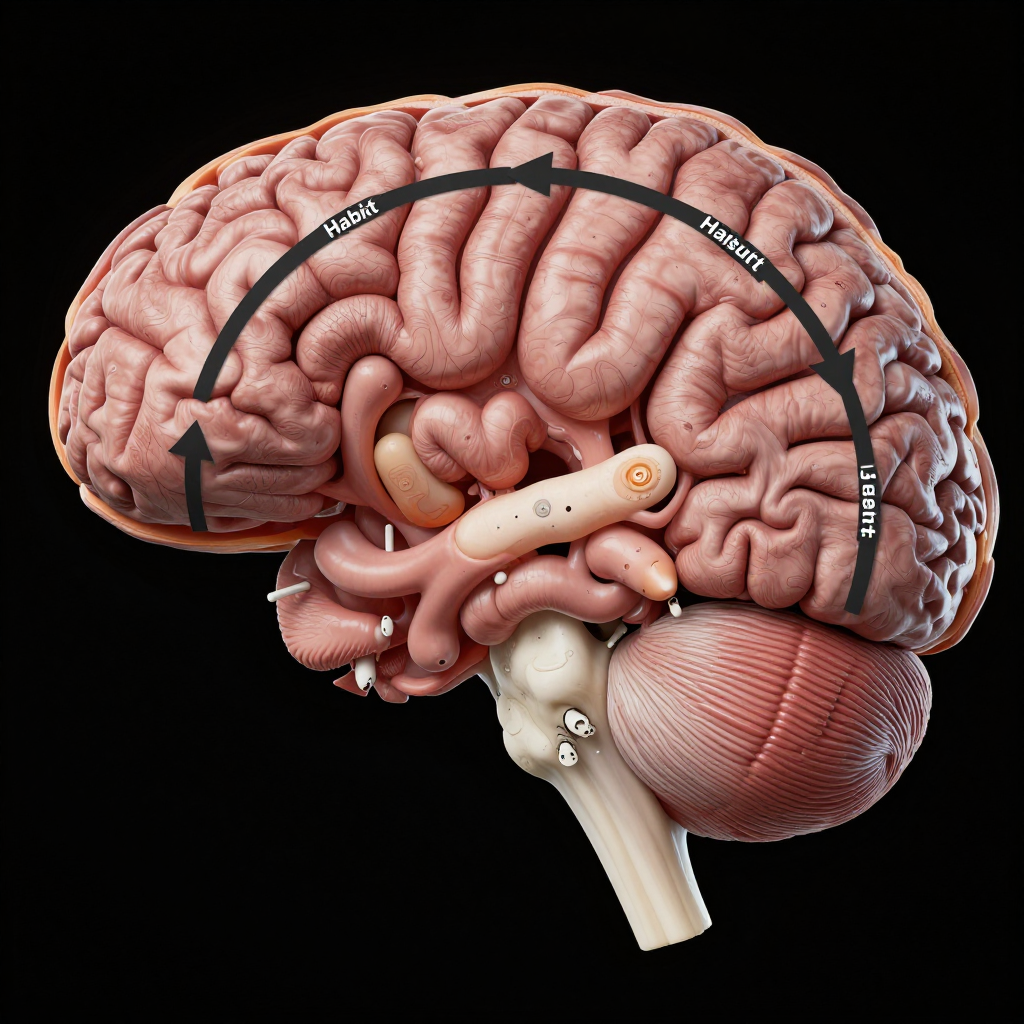
The most widely referenced framework in habit science is the habit loop, a three-part feedback cycle consisting of a cue, a routine, and a reward. This model, popularized by Charles Duhigg's synthesis of behavioral research, draws directly on decades of work in conditioning and learning theory.
The cue is a trigger — a time of day, an emotional state, a location, or a preceding action — that signals the brain to initiate a particular behavioral sequence. The routine is the behavior itself, the automatic response the brain has learned to associate with that cue. The reward is the outcome that tells the brain whether this sequence is worth repeating.
What makes this loop powerful is its self-reinforcing nature. Each completed cycle strengthens the cue-routine association, making the behavior more likely to recur under similar conditions. This is operant conditioning in its most everyday form — behavior shaped by its consequences, exactly as B.F. Skinner described, but playing out in the mundane rhythms of daily life.
Classical conditioning also plays a role, particularly in establishing cue sensitivity. When a neutral stimulus (a specific location, a sound, a smell) becomes reliably paired with a rewarding experience, it gains the power to trigger the associated behavior on its own. The coffee shop that "makes" you want a pastry is not coincidental — it is conditioning.
The Role of Dopamine and Reward in Reinforcing Habits
Dopamine is central to why habits form and why they persist. This neurotransmitter is not simply a "pleasure chemical" — it is more precisely a signal of anticipated reward, a prediction marker that motivates approach behavior.
When a behavior produces a positive outcome, dopamine is released in the brain's reward circuits, reinforcing the neural pathways associated with that behavior. Crucially, research has shown that dopamine release eventually shifts from the reward itself to the cue that predicts it. The brain begins anticipating the reward before it arrives — and this anticipatory signal is what drives the craving that pulls behavior forward.
This is why habits can feel compelling even when we are not consciously thinking about them. The cue activates a dopamine-driven anticipatory state that makes the routine feel almost necessary. Breaking a habit without addressing this anticipatory mechanism is one reason willpower-only approaches so often fail — the neurochemistry is working against the intention.
How Long Does It Actually Take to Form a Habit?
The popular claim that habits form in 21 days is not supported by the available research. The figure traces back to a loose interpretation of observations by plastic surgeon Maxwell Maltz in the 1960s — observations about post-surgical adjustment, not behavioral automaticity.
A more rigorous study by Phillippa Lally and colleagues at University College London found that the time for a new behavior to reach automaticity ranged from 18 to 254 days, with a median around 66 days. The variation depended on the complexity of the behavior, the consistency of practice, and individual differences in neuroplasticity and baseline cognitive patterns.
The practical implication is not discouraging — it is clarifying. Simple behaviors (drinking a glass of water after waking) automate faster than complex ones (a morning exercise routine). Consistency matters more than duration. Missing one day does not reset the process. What disrupts habit formation is irregular repetition, which prevents the cue-routine association from consolidating in the basal ganglia.
Why Habits Are Sticky — And What That Means for Behavior Change
Habits persist because the neural pathways encoding them do not disappear when we stop a behavior — they go dormant. The basal ganglia retains the procedural memory of a habit even after extended periods of non-performance. This is why old habits can resurface under stress or when cues reappear after years of absence.
This persistence is directly tied to how procedural memory differs from declarative memory. You can consciously decide to stop a habit, but the stored routine in the basal ganglia is not erased by that decision. The cue still has the potential to activate the old sequence, particularly when cognitive load is high and deliberate control is compromised.
Stress is a particularly potent disruptor of habit change for this reason. Under stress, the prefrontal cortex — responsible for goal-directed behavior — becomes less active, and the basal ganglia's automatic routines become more dominant. People under chronic stress often revert to older, less adaptive habits precisely because the brain defaults to its most deeply encoded sequences when executive resources are depleted.
This is why effective behavior change rarely works through suppression alone. The more reliable approach, supported by behavioral research, is substitution: keeping the cue and reward while replacing the routine. The loop structure remains intact; only the middle element changes. This leverages the existing neural architecture rather than fighting it.
Applying Habit Science to Real Life
Understanding the mechanisms of habit formation does not guarantee easy change, but it does make the process more navigable. A few principles emerge consistently from the behavioral science literature.
Cue design matters. Because cues initiate the habit loop, engineering reliable, specific cues for desired behaviors dramatically increases the likelihood of repetition. Implementation intentions — plans that specify when, where, and how a behavior will occur — work partly because they function as pre-programmed cues. "I will go for a walk after my morning coffee" is more effective than "I will walk more" because it anchors the behavior to an existing cue.
Reward timing is critical. Dopamine-driven reinforcement works best when the reward closely follows the behavior. For habits whose natural rewards are delayed (exercise, saving money), creating immediate positive feedback — even symbolic — can accelerate the consolidation process.
Environment shapes behavior. Because cues are often environmental, modifying the physical context can reduce friction for desired behaviors and increase it for unwanted ones. Placing running shoes by the door is not a trivial gesture — it is deliberate cue engineering that reduces the activation energy required to initiate the routine.
The science also cautions against over-relying on motivation. Motivation fluctuates; automatic behavior does not. The goal of habit formation is to reduce dependence on motivation by encoding the behavior deeply enough that it runs on cue, not on willpower. That is, ultimately, what automaticity means — and why understanding the neuroscience behind it is worth the effort.
Frequently Asked Questions
What is the difference between a habit and a routine?
A routine is a sequence of behaviors performed regularly and intentionally — it still requires some degree of conscious initiation. A habit, by contrast, is triggered automatically by a cue with minimal deliberate thought. All habits can be described as routines, but not all routines have achieved the automaticity that defines a habit in the psychological sense.
Can habits formed in childhood be unlearned as an adult?
They can be modified, but "unlearned" is not quite the right frame. Early habits encoded in the basal ganglia during developmental periods may be particularly robust due to heightened neuroplasticity in childhood. In adulthood, the neural pathway does not disappear — it can be suppressed or overridden by competing behaviors, but it often remains available to be reactivated under the right conditions.
How does stress affect the habit loop?
Stress tends to shift behavioral control from the prefrontal cortex to the basal ganglia, making automatic routines more dominant and deliberate choice less accessible. This is why people under stress often revert to habitual behaviors — including ones they have worked to change. Managing stress is therefore not peripheral to habit change; it is often central to it.
Are all habits stored in the same part of the brain?
The basal ganglia is the primary site for procedural and habitual memory, but habit-related processing involves a broader network. The prefrontal cortex is involved in goal-directed behavior and habit suppression. The hippocampus contributes to contextual learning. Dopaminergic pathways connecting the ventral tegmental area to the nucleus accumbens are critical for reward-based reinforcement. Habit storage is distributed, not localized to a single region.
What role does intention play once a behavior becomes automatic?
Once a behavior is fully automatic, intention plays a diminished role in its execution — the cue alone can trigger the routine without conscious deliberation. However, intention remains important for initiating habit formation in the first place and for disrupting unwanted habits through deliberate substitution strategies. The relationship between intention and automatic behavior is dynamic, not fixed.