


The Psychology of Motivation: What Drives Human Behavior

Why does one person persist through difficulty while another gives up? Why can a meaningful project feel energizing one day and exhausting the next? The psychology of motivation examines the forces that direct, energize, and sustain human behavior. These forces include biological needs, emotions, personal goals, social relationships, rewards, beliefs, and the surrounding environment.
Motivation is not a fixed personality trait or a single inner fuel. It changes with context. A student may feel intrinsically motivated by curiosity but respond to an approaching deadline through extrinsic pressure. Someone may want to exercise, yet lack the energy, confidence, or social support to begin. Understanding those differences makes motivation more useful than simply telling people to try harder.
What Is Motivation?
Motivation is the psychological process that directs, energizes, and sustains behavior. It helps explain what people choose, how much effort they invest, and why they continue or stop.
Motivation begins with direction: a person focuses on one possibility rather than another. It also involves activation, such as getting out of bed to attend class, and persistence, such as continuing to study after a difficult practice test. These three elements, direction, energy, and persistence, provide a useful framework for understanding behavior.
Psychologists often distinguish between approach motivation, which moves people toward desired outcomes, and avoidance motivation, which helps them escape threats or unwanted consequences. Applying for a job may reflect hope for meaningful work, fear of financial insecurity, or both.
Motivated behavior usually emerges from several influences at once. Human needs create pressure or desire, emotions signal what matters, beliefs shape expectations, and social influence affects what seems acceptable or worthwhile. Motivation therefore asks more than, How badly do you want it? It also asks, What is this situation making possible, difficult, or meaningful?
Intrinsic and Extrinsic Motivation
Intrinsic motivation comes from the activity itself, while extrinsic motivation comes from an external outcome such as money, praise, grades, status, or avoiding punishment. The two forms can coexist and influence each other.
A person who learns a language because they enjoy discovering how it works is intrinsically motivated. Someone who studies for a required examination is responding to an extrinsic motivator. Neither form is automatically superior. External rewards can help people start an unfamiliar task, provide structure, or recognize genuine progress.
The difficulty appears when rewards feel controlling or replace personal meaning. If a child enjoys drawing but receives constant payment for every picture, the activity may gradually become associated with earning rather than exploration. This does not mean rewards always damage intrinsic motivation. Their effect depends on whether they communicate useful information, acknowledge effort, and preserve a sense of choice.
A practical question is: What is the reward doing psychologically? A clear salary compensates labor. Specific feedback can strengthen competence. Public rankings may energize one person and discourage another. Motivation improves when external incentives support a person’s values instead of making them feel manipulated.
For a deeper overview of motivation research and related concepts, the Wikipedia overview of motivation provides useful background terminology.
The Role of Human Needs and Emotions
Human needs and emotions influence motivation by signaling what requires attention, protection, connection, or action. People are more likely to pursue a goal when it meets an important need and feels emotionally meaningful.
Common motivational needs include autonomy, competence, belonging, security, recognition, and physical well-being. A worker may resist a new procedure because it threatens autonomy, not because they are lazy. A teenager may focus intensely on peer approval because belonging feels especially important during that stage of life.
Emotions add speed and intensity. Curiosity can draw someone toward information. Anxiety can prompt preparation or avoidance. Anger may motivate confrontation, while shame may lead a person to hide. Emotions do not always provide accurate instructions, but they reveal how the brain is interpreting a situation.
The same goal can produce different behavior depending on emotional state. A difficult assignment may feel stimulating when a student feels rested and capable, but overwhelming after repeated failure. This is why motivation cannot be separated from sleep, stress, safety, and emotional regulation.
When motivation weakens, ask three questions:
- Which need might be unmet: autonomy, competence, connection, security, or recovery?
- What emotion appears when I imagine taking action?
- Does the environment reduce friction or repeatedly trigger avoidance?
These questions replace moral judgment with psychological investigation.
How Goals, Rewards, and Reinforcement Shape Behavior
Goals shape attention, rewards influence consequences, and reinforcement increases the likelihood that a behavior will happen again. Together, they help turn intention into repeated action, although poorly designed incentives can produce unwanted results.
Goal-setting works best when goals are specific enough to guide action and realistic enough to support progress. “Read more” is vague; “read ten pages after dinner on weekdays” gives behavior a time, amount, and cue. Challenging goals can increase effort, but goals that seem impossible may encourage withdrawal.
Feedback helps people adjust. Immediate feedback is useful for learning a skill, while longer-term feedback may suit complex projects. A useful feedback system answers three questions: What happened? Why did it happen? What is the next manageable adjustment?
Rewards and reinforcement require care. A reward can strengthen behavior when it follows an action consistently, but delayed or unpredictable rewards may be less useful for beginners. Punishment can suppress behavior temporarily without teaching a better alternative. For example, criticizing someone for missing exercise does not provide a workable plan for the next session.
One common mistake is measuring only outcomes. A learner who receives a poor test score may still have used an effective study method and improved their understanding. Tracking process behaviors, such as practice time, review quality, or asking for help, gives motivation more stable evidence of progress.
Self-Determination and the Need for Autonomy
Self-determination theory explains motivation through three basic psychological needs: autonomy, competence, and relatedness. These needs describe the conditions that support willing, sustained engagement.
Autonomy means experiencing a sense of choice and personal endorsement. It does not mean doing everything alone. A person can follow a shared plan while still understanding and accepting why it matters.
Competence is the feeling that one can handle challenges and improve through effort. Tasks that are far beyond current ability create helplessness; tasks that are too easy create boredom. Progress often grows in the middle zone, where the challenge is demanding but achievable with support.
Relatedness refers to feeling respected, included, and connected to others. A supportive teacher, trusted colleague, or encouraging friend can make persistence more likely because effort occurs within a relationship rather than in isolation.
Self-determination theory also clarifies why the same reward can affect people differently. Praise that communicates genuine information, such as “your practice improved your accuracy,” may support competence. Pressure that implies control, such as “you are only valuable if you win,” can weaken autonomy.
Why Motivation Changes Over Time
Motivation changes because habits, context, emotions, social influence, confidence, setbacks, and priorities change. A person may still value a goal while lacking the conditions or psychological resources to pursue it.
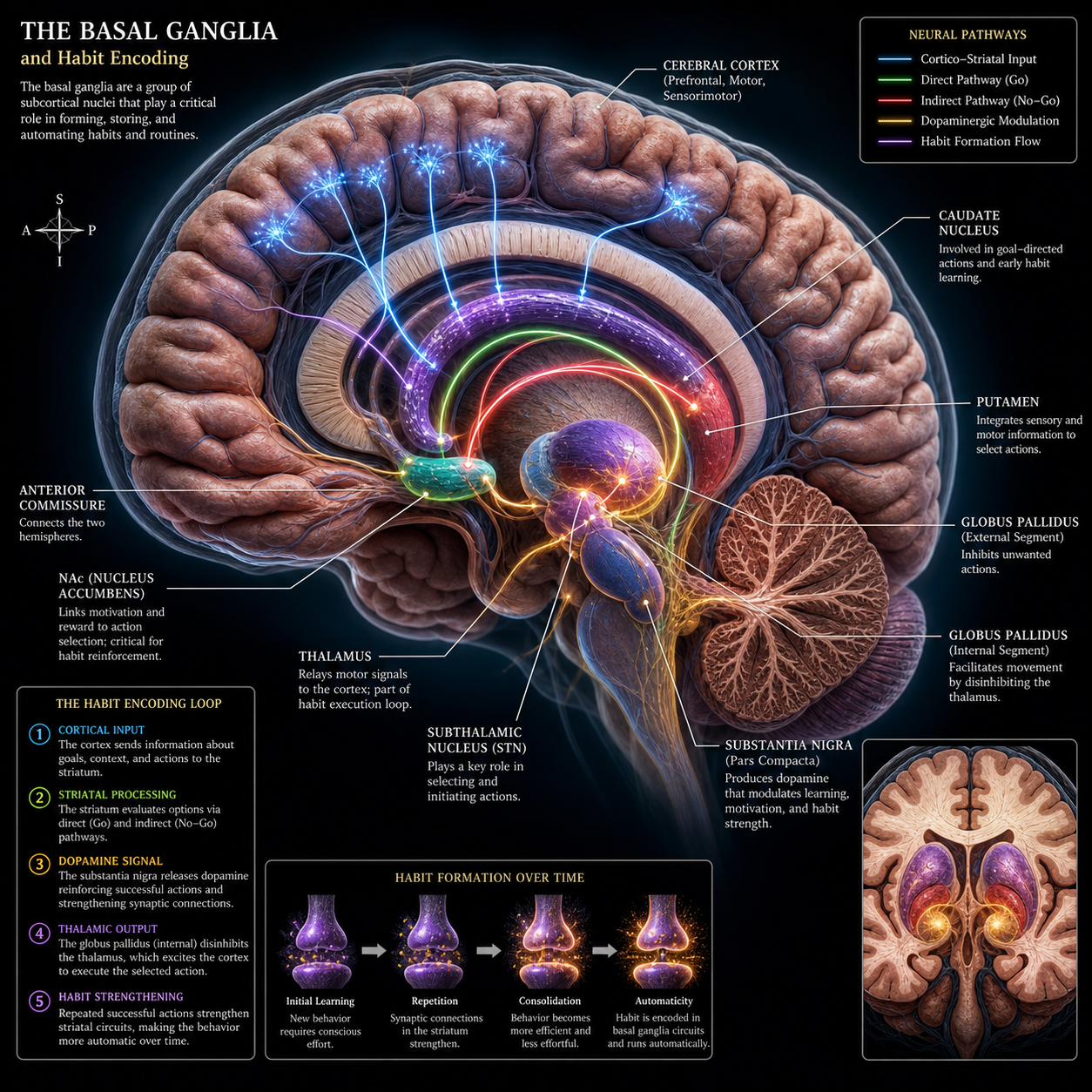
Habits reduce the amount of conscious motivation required. When a behavior is linked to a stable cue, such as writing after morning coffee, the environment helps initiate action. Habit formation is gradual, however, and missed days do not erase progress. The useful response is to resume rather than treat one interruption as failure.
Self-efficacy, or the belief that one can perform a specific behavior, also matters. Someone may value public speaking but avoid it because past embarrassment has lowered confidence. Small successful repetitions can rebuild self-efficacy more effectively than inspirational slogans.
Social influence changes motivation through expectations, modeling, accountability, and identity. A friend who exercises regularly can make activity seem normal. A critical group can make experimentation feel risky. Culture, family roles, workplace norms, and online communities all shape which goals receive approval.
Setbacks often reveal a mismatch between a goal and its current design. If a person repeatedly fails to study at night, the problem may be fatigue rather than weak character. Moving study to an earlier period, reducing the first step, or adding social support may work better than increasing self-criticism.
Applying Motivation Psychology in Everyday Life
To strengthen motivation, connect a meaningful reason with a specific action, supportive context, visible progress, and realistic recovery. This approach works better than waiting for constant enthusiasm.
For learning
Choose a clear purpose, divide material into short sessions, and use retrieval practice or explanation rather than passive rereading. Track behaviors you control, such as completing a practice set, and treat mistakes as information about what to review.
For work
Clarify why the task matters, identify the next physical action, and negotiate autonomy where possible. If a project feels flat, examine whether the issue is unclear expectations, insufficient competence, lack of recognition, or weak connection to other people.
For health and personal development
Begin with a behavior small enough to repeat on a difficult day. Prepare the environment in advance: place walking shoes by the door, keep nutritious food available, or schedule a class with a supportive person. The goal is to reduce dependence on mood while preserving personal choice.
A reflection framework
- Need: What need is this behavior serving or protecting?
- Meaning: Why does the goal matter to me or to someone I care about?
- Confidence: What evidence shows that I can take the next step?
- Context: Which people, cues, or obstacles influence the behavior?
- Adjustment: What is one change that would make action easier tomorrow?
Motivation can be developed, but it is rarely developed through pressure alone. Sustainable change usually combines insight with practice: understand the need, design the environment, take a manageable action, and learn from the result.
Frequently Asked Questions
What is the difference between intrinsic and extrinsic motivation?
Intrinsic motivation comes from interest or satisfaction within an activity. Extrinsic motivation comes from an external outcome, such as payment, grades, praise, or avoiding punishment. Both can operate together.
Why do people lose motivation?
Motivation may decline when goals feel unclear, rewards lose meaning, confidence falls, needs remain unmet, stress increases, or the environment makes action difficult. Losing motivation does not always mean losing commitment.
How do emotions affect motivation?
Emotions direct attention and prepare people to act. Curiosity may encourage exploration, anxiety may prompt preparation or avoidance, and frustration may signal the need for a new strategy.
Can motivation be developed or strengthened?
Yes. People can strengthen motivation by choosing meaningful goals, building self-efficacy through small successes, creating supportive habits, improving feedback, and increasing autonomy and connection.
What role do rewards play in behavior?
Rewards can reinforce behavior and provide useful feedback, especially when they are timely and fair. However, controlling or poorly designed rewards may reduce intrinsic motivation or encourage people to optimize the reward instead of the deeper goal.